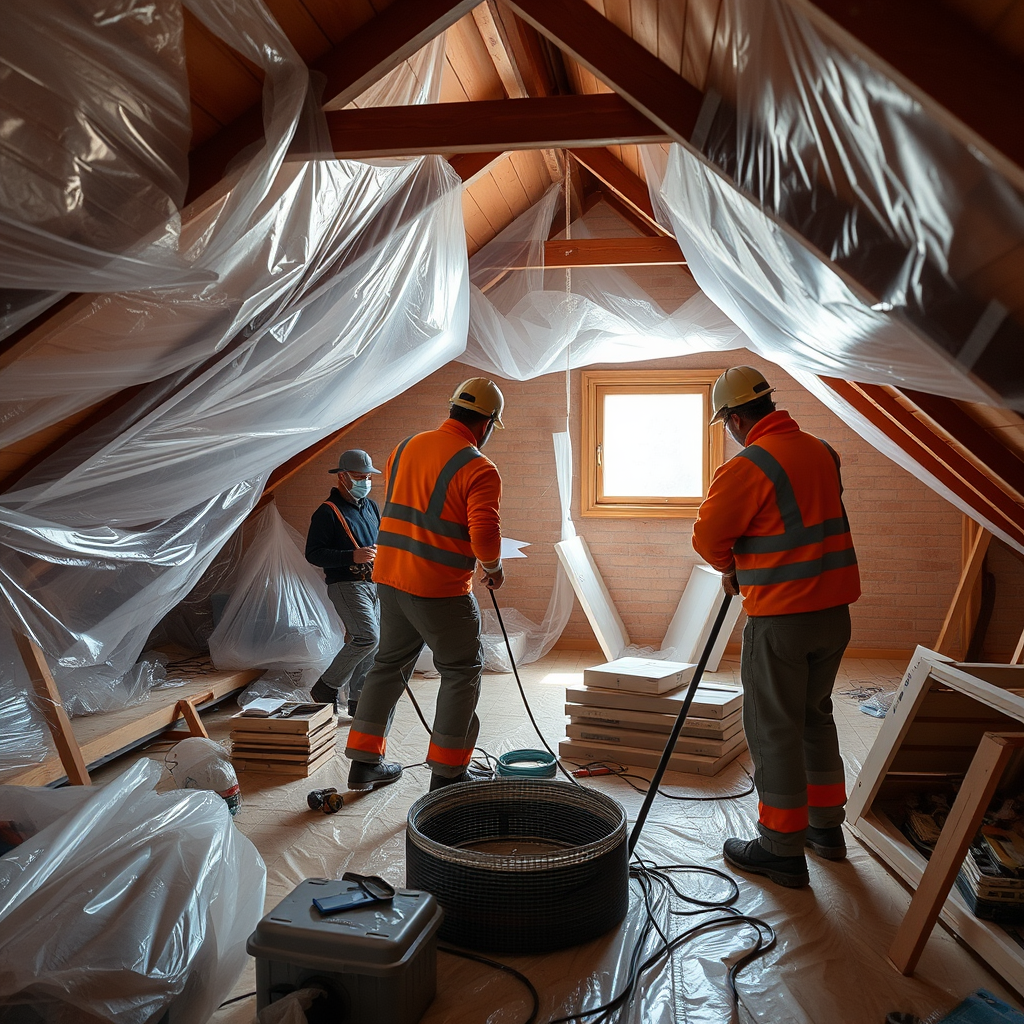
When rodents get into an attic, the insulation pays the price. Mice, rats, and squirrels burrow through it, nest in it, and leave behind droppings, urine, and the odor that comes with them. The result is more than gross — it is a genuine health concern, and the only real fix is complete removal under containment. Here is what is involved and why it matters.
Why Contaminated Insulation Has to Go
Rodent droppings and urine can carry bacteria, viruses, and allergens. When the contaminated insulation is disturbed — even just by walking through the attic — those particles can become airborne and get pulled into your home's air. The contamination also holds a persistent ammonia-like odor that will not air out and can actually attract more rodents back to the same spot.
You cannot clean your way around it. Topping new insulation over contaminated material seals the problem in, and it does nothing about the health risk or the smell. The contaminated insulation has to come out.
The Risks of Doing It Yourself
It is understandable to want to handle it yourself, but DIY removal of rodent-contaminated insulation is risky for a few reasons:
- Disturbing droppings and nests releases particles into the air you breathe
- Attics are hot, cramped, and easy to misstep in
- Without containment, contamination spreads into the rest of the house
- The underlying entry points and damage often go unaddressed
This is a job where the right protective equipment and containment genuinely matter.
How Professional Removal Works
A proper contaminated-insulation removal is handled as a biohazard from start to finish:
1. Assessment
The crew identifies the type of insulation, the extent of the contamination, and any related issues — moisture, mold, chewed wiring, or active entry points. Older vermiculite is flagged for asbestos testing before anything is disturbed.
2. Containment
Before removal begins, the attic access is sealed and the path through the home is protected. This keeps contaminated dust and particles from spreading into living spaces while the work is done.
3. PPE
Crews wear respirators and full personal protective equipment. This is non-negotiable for contaminated material — it protects the workers and, by extension, keeps the process controlled.
4. Removal
Loose-fill insulation is vacuumed out with a commercial insulation vacuum and collected in sealed bags outside. Batts are bagged at the source. Nesting material, droppings, and fouled insulation all come out together, so nothing contaminated is left behind.
5. Cleaning and Prep
After the material is gone, the space is cleaned and prepped. Addressing the contamination — not just the insulation — is what keeps the problem from carrying straight over into the new insulation.
6. Disposal
Everything removed is bagged, hauled off, and disposed of properly. You are not left with bags of contaminated material to deal with.
Don't Forget the Entry Points
Removing contaminated insulation solves the immediate problem, but rodents got in somehow. Sealing entry points and addressing what attracted them is what keeps the new insulation from suffering the same fate. A removal is the right time to get a clear, unobstructed look at the attic and address those issues before fresh insulation goes in.
What You're Left With
When the job is done, the attic is cleared to the bare deck and joists, cleaned, and ready for fresh insulation. The health hazard is gone, the odor is gone, and you have a clean slate.
Signs Rodents Are the Problem
Not sure whether your insulation is contaminated? A few telltale signs point to rodent activity in the attic: scratching or scurrying sounds overhead, a persistent musty or ammonia-like smell, droppings along the attic floor or top plates, greasy rub marks near entry points, and chewed wiring or cardboard. You may also notice the insulation looks tunneled, matted, or pushed into piles. Any of these is reason enough to have the attic inspected — and to avoid disturbing the material yourself until a specialist can handle it safely under containment.
Get a Free Estimate
If you suspect rodents have contaminated your attic insulation, do not disturb it — let a specialist handle it safely. We are a national insulation-removal company and we handle contaminated insulation as the biohazard it is, with full containment, proper PPE, and complete cleanup. Call 844-967-5247 or email josh@contractorschoiceagency.com for a clear, free, no-obligation estimate. We work nationwide.