Not all insulation removal is the same. The two most common types of attic insulation — blown-in loose-fill and batts — come out in completely different ways, with different equipment, timelines, and challenges. Knowing the difference helps you understand what a removal job actually involves. Here is how each is handled.
What's the Difference Between Them?
Batt insulation comes in pre-cut rolls or sheets, usually fiberglass, laid between joists and studs. It is the pink or yellow material most people picture when they think of insulation.
Blown-in (loose-fill) insulation is loose material — typically cellulose or loose fiberglass — that is blown into the attic with a machine, forming a fluffy layer that fills gaps and conforms to the space. Cellulose is gray and paper-based; blown-in fiberglass is lighter and fluffier.
Because one is in neat pieces and the other is loose, they are removed very differently.
Removing Batt Insulation
Batt removal is largely a hands-on process:
- Crews pull the batts up by hand, roll them, and bag them
- They work carefully around wiring, junction boxes, recessed lights, and venting
- Bagged material is carried out and hauled off
Batt removal is straightforward where there is good access, but it is physical and slow if the attic is tight or the batts are old, dusty, and breaking apart. Containment and PPE still matter — old fiberglass sheds fibers when disturbed.
Removing Blown-In Insulation
Loose-fill is a different animal entirely. You cannot pick it up by hand without making an enormous mess, so it is removed by commercial insulation vacuum:
- A powerful vacuum unit sits outside, often on a truck
- Long hoses run from the unit into the attic
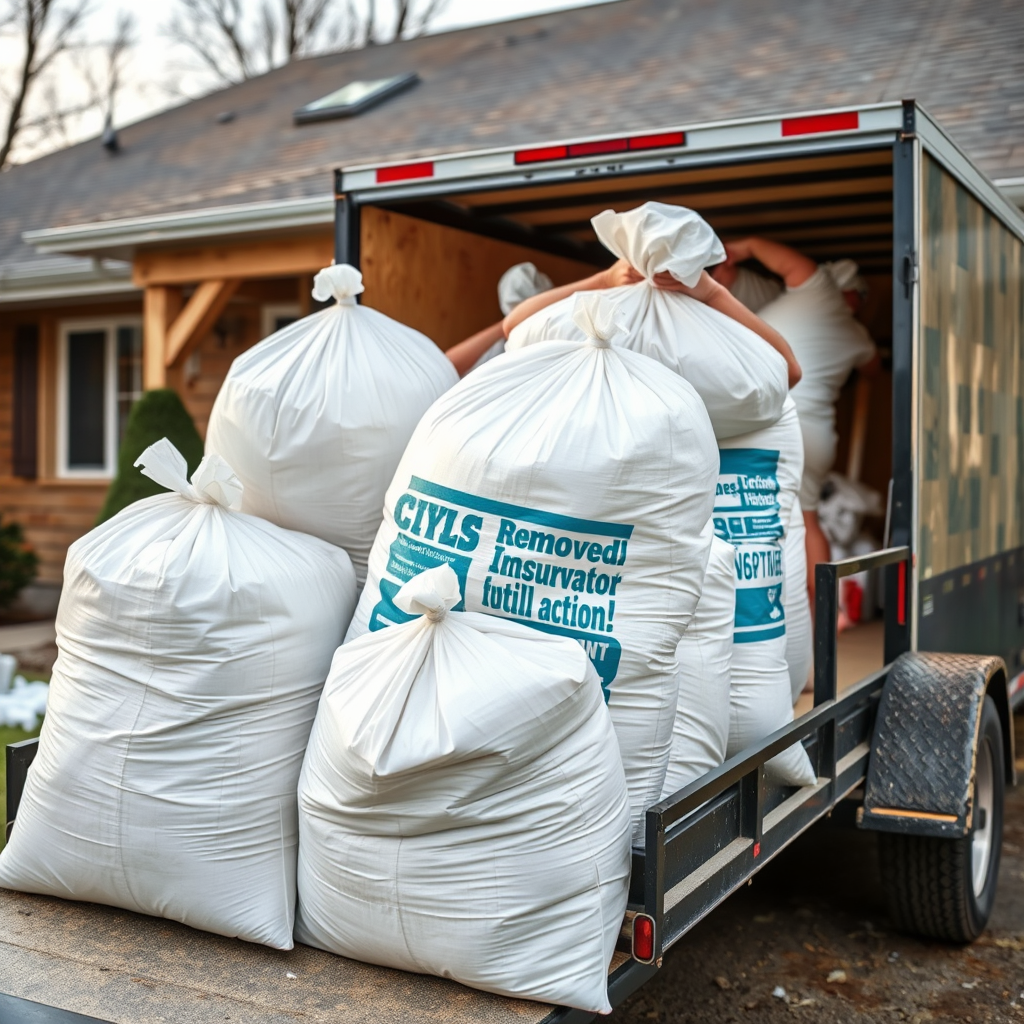
- The loose-fill is sucked straight out and collected in sealed bags outside
- The material never has to be carried through your living space
This is the key advantage of vacuum removal — speed and cleanliness. A full attic of loose-fill that would take days to remove by hand can be vacuumed out in hours. The vacuum also reaches into joist bays, corners, and edges that hand removal would miss, leaving a more complete clean-out.
Which Is Faster?
For loose-fill, vacuum removal is dramatically faster and cleaner than any manual method. For batts, removal speed depends mostly on access and condition. Many attics contain a mix — batts on the floor with blown-in on top, or loose-fill that has been added over old batts — and a removal crew handles both in the same visit, vacuuming the loose material and pulling the batts.
What Stays the Same
Regardless of the type, good insulation removal shares the same fundamentals:
- Containment at the attic access so dust stays out of the home
- PPE — respirators and protective gear for the crew
- Care around wiring, fixtures, and venting
- Cleanup and haul-off so nothing is left behind
- A clean, bare, inspectable space at the end, ready for re-insulation
And one important caution applies to both: older vermiculite insulation may contain asbestos and should be tested before it is disturbed, no matter what is on top of it.
Why It Matters for Your Project
Whether you are re-insulating, air-sealing, fixing a roof, or dealing with contamination, knowing what type of insulation you have helps set expectations for the removal. The good news is that a specialist handles both batts and blown-in in a single, contained process and leaves you with a clean attic ready for whatever comes next.
Mixed Attics: Both Types at Once
In practice, plenty of attics contain both. A common scenario is original batts on the attic floor with blown-in loose-fill added on top years later to boost the R-value. Another is layers of different loose-fill from successive top-ups. A removal crew handles a mixed attic in one visit — vacuuming out the loose material first to expose the batts, then pulling and bagging the batts underneath. Because both are removed together under the same containment, you end up with the same clean, bare deck regardless of how many layers or types were up there to begin with.
Get a Free Estimate
Not sure whether you have batts, blown-in, or both? That is exactly what we figure out. We are a national insulation-removal specialist with the crews and commercial vacuum equipment to handle any type. Tell us what is in your attic — photos help — and we will give you a clear, free, no-obligation estimate for the removal, cleanup, and haul-off. Call 844-967-5247 or email josh@contractorschoiceagency.com. We work nationwide.